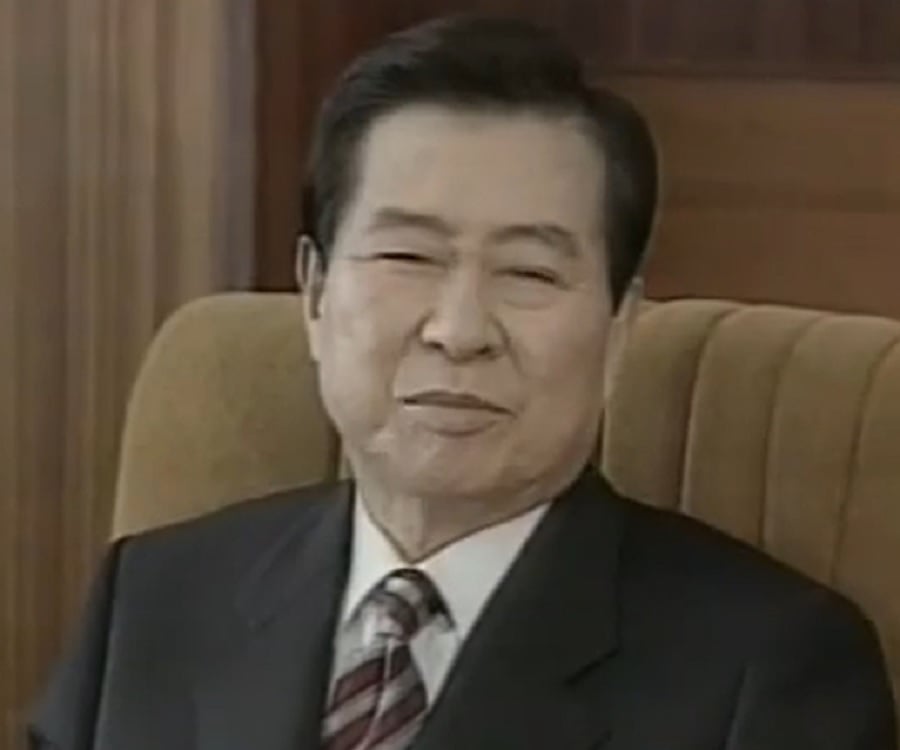
Korea lost one of it's greatest political figures on Tuesday, August 18, 2009. Kim Dae Jung, whom many would regard Korea's first real president, was incredibly loved by the people of Gwangju and the Jeolla province. His life had incredible challenges and successes that would rival the best Hollywood script. (I'm sure there will be a movie in the near future.)Although Korea is seen as a homogeneous society, many people don't realize the deep-seeded regional prejudices some Koreans hold. Since Kim Dae Jung was from the southwestern Jeolla province, this effectively pitted him against the established political leadership throughout his career.
Within South Korea, the most important regional difference exists between the Gyeongsang region...in the southeast, and the Jeolla region...in the southwest. The two regions, separated by the Jirisan Massif, nurture a rivalry said to reach back to the Three Kingdoms of Korea Period, which lasted from the fourth century to the seventh century C.E., when the kingdoms of Baekje and Silla struggled for control of the peninsula. Observers noted that interregional marriages rarely occur, and that as of 1990 a new four lane highway completed in 1984 between Gwangju and Daegu, the capitals of Jeollanam-do and Gyeongsangbuk-do provinces, have been unsuccessful in promoting travel between the two areas.
South Korea's political elite, including presidents Park Chung Hee, Chun Doo Hwan, and Roh Tae Woo, have come mainly from the Gyeongsang region. As a result, Gyeongsang has been a special beneficiary of government development assistance. By contrast, the Jeolla region has remained comparatively rural, undeveloped, and poor. Chronically disaffected, its people rightly or wrongly have a reputation for rebelliousness. Regional bitterness intensified with the May 1980 Gwangju massacre, in which government troops sent to quell an insurrection killed about 200 and perhaps many more inhabitants of the capital of Jeollanam-do. Many of the troops reportedly hailed from the Gyeongsang region. -New World Encyclopedia "Demographics of South Korea" article
He was determine, however, to overcome this obstacle and to stand against the successive dictatorships that followed the Korean War. One of the most remarkable events happened during the great political upheaval of the 1970s when Kim Dae Jung barely survived an assassination attempt.He later said his kidnappers had attached a weight to him aboard a boat and were about to throw him into the sea when the United States government intervened. Five days later, he was dumped, shaken and bruised, at the gate of his Seoul home and was placed under house arrest. -NY Times obituary page 2 online
Yes, that really happened. Incredible.
 Thus, he was dearly loved by the people of Gwangju and will be dearly missed. On Saturday night, a massive memorial was held downtown. Koreans from the surrounding farms and villages came to pay their respects as did city-dwellers. All ages were in attendance. I was fortunate enough to be able to witness the memorial first-hand.
  In Korea, people pay their respects by laying a flower in front of the deceased's photo and bowing. Religious affiliation doesn't matter as this is a Confucian custom, not a Buddhist one. In fact, Kim Dae Jung was a staunch Catholic. There were so many people lined up to bow, that two separate stations within the square had to be made.
  One was setup on a stage and could accommodate large groups of people (whole families even), and the other was setup in the back of a van that was parked on main street. To an American, this might seem a little...sacrilegious. However, Koreans are nothing if not pragmatic and the fan served its purpose well. There were long lines for both throughout the night.
 Another funeral custom is to send wreaths of these white flowers (of which I don't know the English name) offering your condolences. The bigger the wreath, the more important or rich you are, or, perhaps less cynical, the closer you were to the deceased or the deceased's family.
 One spontaneous memorial was created with candles, saying "615." June 15 was the day Kim Dae Jung met with Kim Jong Il in Pyongyang. This was an unprecedented event and one that inspired hope in the millions of families separated from their loved ones in North Korea.
 Of course, Jeolla citizens remember late ex-president Roh Mu Hyun as well. Roh committed suicide earlier this year in an act of defiance against corruption investigations (seen as a political witchhunt orchestrated by the current conservative administration). These two men represented democracy in Korea (which happens to be extremely young, something many Americans don't realize) as well as the unification of the Korean peninsula (a hope that is currently fading due to recent political activity).
You can read the NY Times obituary here.
~Here's a short biography of Kim Dae Jung for further information.~
Kim Dae Jung from The Famous People
| Famous as | Former President of South Korea |
| Born on | 03 December 1925 |
| Born in | South Jeolla, South Korea |
| Nationality | Korea, Republic Of |
| Works & Achievements | Nobel Peace Prize (2000); Known For: Struggle against the Authoritarian Rule in Korea |
Childhood & Early Life Kim Dae-Jung was born on 3 December 1925 in a small village of South Jeolla in South Korea and received his graduation degree from a commercial high school in 1943. His career in politics started during the administration of Syngman Rhee, who was the first president of Korea. After two unsuccessful attempts, he was elected as a representative to the National Assembly in 1961, but the assembly was dissolved by a military coup led by Park hung-hee who later established himself as a dictator. Political Activities Kim Dae Jung’s political career took a head start when he won a seat in the house in the two subsequent elections in 1963 and 1967, thus becoming a distinguished opposition leader. He was appointed the spokesman for the Democratic Party in 1965 and the following year he was made the chairman of the Party’s policy planning committee. Kim Dae Jung contested for the presidency against Park in 1971. Though he failed in his run for the position, he successfully gave a close chase to Park. A great orator he was, he gained unwavering loyalty from his party members and his native place Jeolla, where he received a record % of the popular vote, which has remained unsurpassed in South Korean politics. Within less than one year after coming to power, President Park imposed martial law in the country, banning all political activities and forcing a so called revitalizing reform through the National Assembly. Kim along with his party members objected to these tactics to attain power and led campaigns against Park in the U.S. and Japan- which apparently became a factor behind in his abduction in August 1973- when he was kidnapped by agents of Korean Central Intelligence Agency from a Tokyo Hotel. He was released in a week after the U.S. and Japan intervened and was placed under house arrest. On 1 March 1976, Kim was arrested for instigating a pro-democracy demonstration and was sentenced to 5 year imprisonment but was released in 1978; facing another house arrest for the second time. Following the assassination of President Park by his close aids in October, 1979, Kim had his civil and political rights restored. However within a few months, another group of soldier seized power and Kim was again thrown into jail on the charges of treason. Initially, he was sentenced to death by a military court which was altered to life imprisonment and later, was changed to 20 year prison. In December 1982 his prison term was suspended giving him exile to the United States. During his exile to the U.S. Kim lived in Boston, Massachusetts and lectured at Harvard University as a visiting faculty to the Centre for International Affairs. Upon his return to Seoul in 1985, he was arrested and put under house arrest yet again but his return fueled the pro-democracy movement in the nation. In 1987, all charges against him were suspended and his political and legal rights were fully restored. Rise to Power In 1987 Presidential elections, Kim Dae-Jung was defeated by Roh Tae-woo. He faced a third failure in the 1992 elections, when he was defeated by Kim Young-sam, who won the presidency. Disheartened by these initial failures, Kim-Dae-Jung took a temporary hiatus from politics and moved to the United Kingdom, where he served as visiting scholar at Cambridge University. However, he returned to politics in 1995 and sought to run for the presidency. As the Asian financial crisis hit the country, crushing its economy, a revolt broke out against the Young-sam government just weeks before the election. The situation became constructive for him to win the election held in December 1997 and he easily defeated Lee-Hoi-chang, Young-sam’s descendant. Presidency Kim Dae-Jung was sworn in as the fifteenth President of South Korea on 25 February 1998 after a controversial victory. He took charge of the office when the economic crisis had reached its peak in South Korea. Kim briskly pushed economic reforms recommended by the International Monetary Fund and employed effective measures to revitalize the declining economy. His policies brought transparency in the accounting practices and subsidies to large corporations were dropped or cut altogether. The country witnessed a phenomenon recovery from the Asian Financial Crisis under his administration although many believe that the recovery was inevitable. Kim is credited with his successfully negotiation with North Korea; adopting a policy that has been termed the Sunshine Policy. However, North Korea violated the term of the engagement policy by developing nuclear weapons and has not withdrawn the North Korean Troops; Kim’s visit to North Korean premier Kim Jong-il led to his winning the Nobel Peace Prize in 2000. Kim Dae-Jung completed his five year presidential term in 2003 to be succeeded by Roh Moo-hyun. | ||||
Timeline: | ||||
1925- Kim Dae-Jung was born on 3 December 1925. 1943- He completed his graduation in 1943. 1961- He was elected as a representative to the National Assembly in 1961. 1963- He won a seat in the house in 1963 and 1967 elections. 1965- He was appointed the spokesman for the Democratic Party in 1965. 1966- Kim was made the chairman of the Party’s policy planning committee. 1971- Kim failed in his run for presidency against Park. 1973- He was kidnapped by agents of Korean Central Intelligence Agency. 1976- Kim was arrested and sentenced to 5 year prison. 1978- He was released in 1978 and placed under house arrest. 1979- President Park was assassinated in October, 1979. 1982- His prison term was suspended giving him exile to the United States. 1985- He returned to Seoul where he was arrested and put under house. 1987- He was cleared of all charges and his political and legal rights were restored. 1987- Kim Dae-Jung was defeated by Roh Tae-woo in the Presidential elections. 1992- He was defeated by Kim Young-sam in presidential elections. 1995- He returned to politics in 1995. 1997- Kim won the Presidency in December 1997. 1998- Kim Dae-Jung was sworn in as the fifteenth President of South Korea on 25 February. 2000- Kim was awarded the Nobel Peace Prize in 2000. 2003- He completed his presidential term of 5 years in 2003. |